
Estimated reading time: 9 minutes
Quick Answer
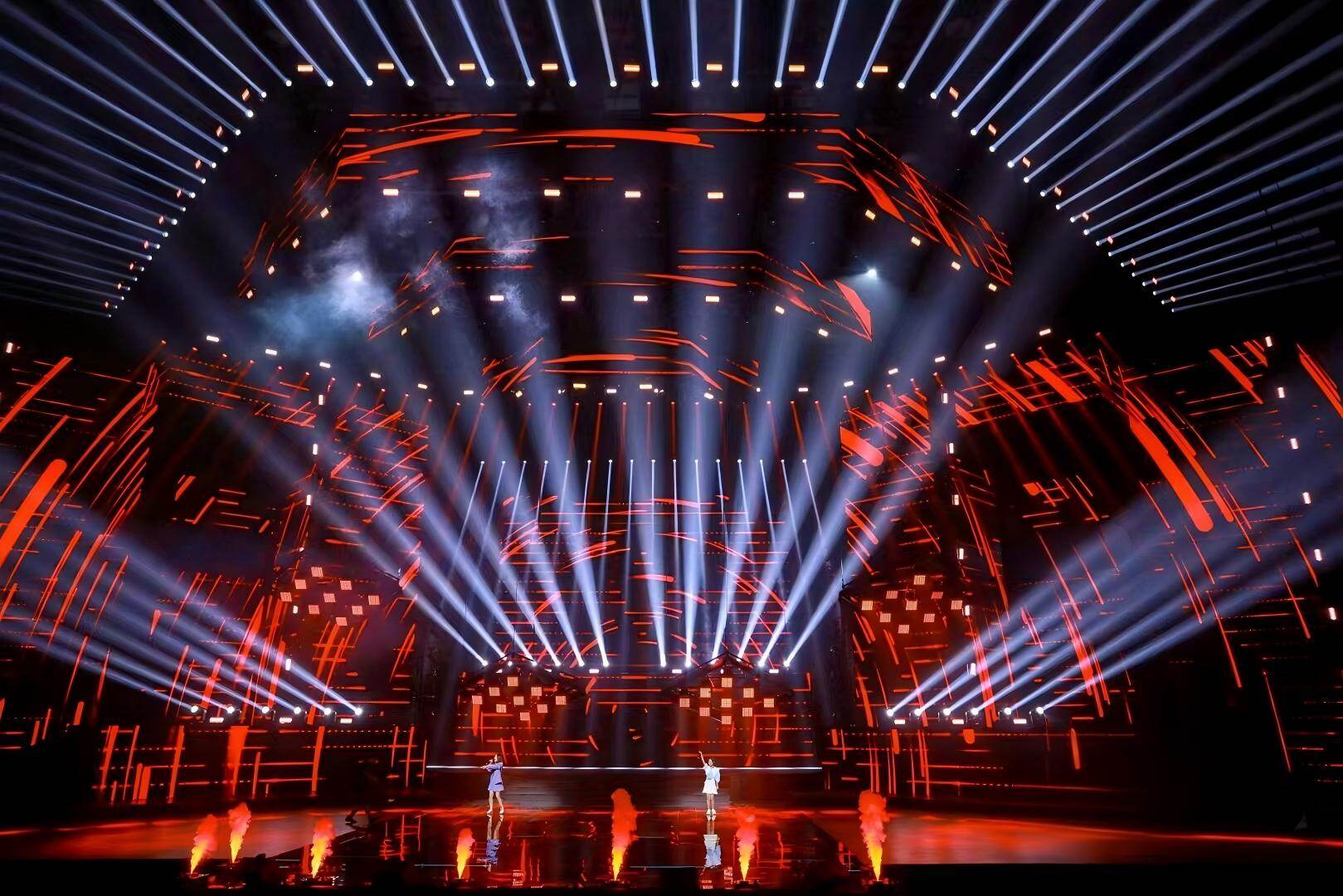
In professional concert stage lighting and theater LED fixtures, DMX512 is the undisputed industry standard for a reason: it provides reliable, high-speed, and precise control of every fixture on stage. Unlike consumer-grade Wi-Fi or IR remote systems, DMX512 ensures zero-latency synchronization, allowing lighting designers to execute complex cues in perfect time with music and dialogue. When specifying professional touring lights, prioritize DMX512 compatibility alongside high CRI theater lighting (CRI 90+) for accurate skin tones and stage wash lighting with smooth, flicker-free dimming.
Introduction: The Difference Between "Lights" and "Lighting Design"
Anyone can buy a few LED fixtures and illuminate a stage. But true concert stage lighting and theater design is an art form — one that relies entirely on the precise, reliable control of those fixtures.
In a concert, the lighting must hit a specific color, at a specific intensity, at the exact millisecond the bass drops. In a theater production, a subtle shift in color temperature must happen seamlessly during a monologue without distracting the audience.
Achieving this level of precision is impossible with consumer-grade lighting controlled by smartphone apps or infrared remotes. It requires a professional protocol: DMX512.
This technical guide explains why DMX512 is non-negotiable for professional venues and how to specify the right theater LED fixtures for your next project.
1. What Is DMX512 and Why Is It the Industry Standard?
DMX512 (Digital Multiplex with 512 pieces of information) is a standardized digital communication protocol used to control stage lighting and effects.
The Technical Basics
A single DMX512 "universe" can control up to 512 individual channels. Each channel controls a specific parameter of a fixture — such as:
Intensity
Color (Red, Green, Blue, White)
Pan and tilt
Gobo selection
Strobe rate
Daisy-Chain Architecture
DMX512 uses a daisy-chain topology:
Run a single data cable from the lighting console to the first fixture
From that fixture to the next
And so on
This drastically simplifies cabling compared to running individual power or data lines to every single light.
Universal Compatibility
DMX512 is an open standard. A lighting console from one manufacturer can control theater LED fixtures from another manufacturer, as long as both adhere to the DMX512 protocol. This interoperability is what makes it the global standard for professional touring lights.
2. The Critical Role of DMX512 in Concert Stage Lighting
In a live concert environment, timing is everything. The lighting must be an extension of the music.
Zero-Latency Synchronization
Wi-Fi and Bluetooth control systems suffer from latency and signal dropouts — unacceptable in a live show. DMX512 provides a hardwired, near-instantaneous signal, ensuring that lighting cues hit perfectly on the beat.
Complex Programming
Modern concert stage lighting involves hundreds of moving heads, wash lights, and strobes, all executing complex, synchronized sequences. DMX512 allows lighting programmers to:
Create and store thousands of cues
Trigger them instantly via a console or timecode
Reliability Under Pressure
In a touring environment, equipment is subjected to constant movement, vibration, and extreme temperatures. DMX512 cables and connectors (typically 3-pin or 5-pin XLR) are rugged and reliable, designed specifically for the rigors of the road.
3. Why Theater LED Fixtures Demand More Than Just Control
While DMX512 provides the control, the quality of the light itself is equally important for theater productions.
High CRI Theater Lighting
In a theater, the audience must see the actors' faces clearly and naturally. High CRI theater lighting (CRI 90+ or even 95+) ensures:
Skin tones are rendered accurately
Costumes look vibrant
Makeup appears as intended
Low CRI fixtures can make actors look sickly or washed out.
Flicker-Free Dimming
Theatrical dimming must be perfectly smooth, from 100% down to 0%. Some lower-quality LEDs exhibit "flicker" or "stepping" when dimmed, which is:
Distracting to the audience
Problematic for broadcast or recording
Professional theater LED fixtures are designed for flicker-free, theatrical-grade dimming curves.
Silent Operation
Theaters require absolute silence during performances. Fixtures with loud cooling fans are unacceptable. Look for:
Fanless designs
Ultra-quiet, temperature-controlled fans
4. The Backbone of Any Show: Stage Wash Lighting
Stage wash lighting is the foundational layer of any lighting design. It provides the even, broad illumination that allows the audience to see the performers and the stage set.
Even Coverage
A good stage wash eliminates:
Dark spots
Harsh shadows
This is achieved through fixtures with wide, soft beam angles and sophisticated lens systems.
Color Mixing
Modern stage wash fixtures use RGBW or RGBA color mixing, allowing you to create virtually any color in the spectrum. DMX512 control allows for precise color calibration, ensuring that the wash matches the color of the spotlights and moving heads.
The Role of DMX512 in Stage Wash
In a large rig, you may have dozens of wash fixtures. DMX512 allows you to:
Group them and control them as a single unit
Control them individually
Give the lighting designer complete creative freedom
5. Specification Checklist for Professional Touring Lights
Feature | Specification | Why It Matters |
|---|---|---|
Control Protocol | DMX512 (5-pin XLR preferred) | Industry standard for reliability and compatibility |
CRI | ≥90 (Theater), ≥80 (Concert) | Accurate color rendering for performers and set |
Dimming | Flicker-Free, 0–100% | Essential for smooth transitions and camera work |
Color Mixing | RGBW / RGBA | Full spectrum color control without gels |
Beam Angle | Interchangeable (15°–60°) | Versatility for wash, spot, and effect applications |
Cooling | Fanless or Quiet Fan | Silent operation for theater; durability for touring |
Housing | Die-Cast Aluminum | Durability and efficient heat dissipation |
FAQ: DMX512 for Concert & Theater Lighting
Q1: Can I use DMX512 with any LED fixture?
No. The fixture must be designed with a DMX512 interface (typically 3-pin or 5-pin XLR ports). Consumer-grade fixtures that only offer Wi-Fi or IR remote control cannot be integrated into a DMX512 network without additional, often unreliable, converters.
Q2: What is the difference between 3-pin and 5-pin DMX cables?
5-pin XLR is the official DMX512 standard. The extra two pins were originally intended for secondary data (like RDM). However, many manufacturers use 3-pin XLR for cost savings. For professional touring lights, 5-pin is preferred for reliability, but 3-pin is common in smaller venues. Always check the compatibility of your console and fixtures.
Q3: Why is high CRI important for theater LED fixtures?
High CRI (Color Rendering Index) ensures that colors appear natural and accurate under the light. In a theater, this is critical for:
Skin tones
Costumes
Set design
A CRI of 90+ is recommended for theater; 95+ is ideal for broadcast and high-end production.
Q4: How many DMX channels does a typical moving head light use?
It varies by fixture:
Simple wash light — 6–12 channels (Dimmer, R, G, B, W, Strobe, etc.)
Complex moving head — 20–40 channels or more (with gobos, prisms, focus)
You must calculate your total channel count to determine how many DMX universes you need.
Q5: What is the maximum run length for a DMX512 cable?
DMX512 can run up to 300 meters (about 1,000 feet) without a signal amplifier. Beyond that, a DMX splitter or amplifier is required to regenerate the signal and maintain reliable communication.
Q6: Can DMX512 control LED fixtures and traditional lighting together?
Yes. DMX512 is protocol-based, not fixture-specific. As long as the fixture — LED, halogen, or moving light — has a DMX512 interface, it can be controlled from the same console and integrated into the same lighting design.
Summary
Consideration | Recommendation |
|---|---|
Control Protocol | DMX512 (5-pin XLR preferred) |
CRI | ≥90 for theater; ≥80 for concert |
Dimming | Flicker-free, 0–100% |
Color Mixing | RGBW / RGBA |
Beam Angle | Interchangeable 15°–60° |
Cooling | Fanless or quiet fan |
Housing | Die-cast aluminum |
Max Run Length | 300m without amplifier |
Related Reading
How to Choose a Reliable DMX512 Stage Lighting Supplier for Your Venue →
DMX512 vs RDM: Which Control Protocol Do You Need for Stage Lighting? →
5 Common DMX512 Wiring Mistakes That Cause Stage Lighting Failures →
Need Professional Stage & Theater Lighting for Your Next Production?
We supply DMX512-compatible concert stage lighting, high CRI theater LED fixtures, and reliable professional touring lights designed for the world's most demanding stages.
👉 Contact Us Today for samples, technical support, or a quote.