
Estimated reading time: 9 minutes
The Story at a Glance
Client: Paul (Show Choir Production)
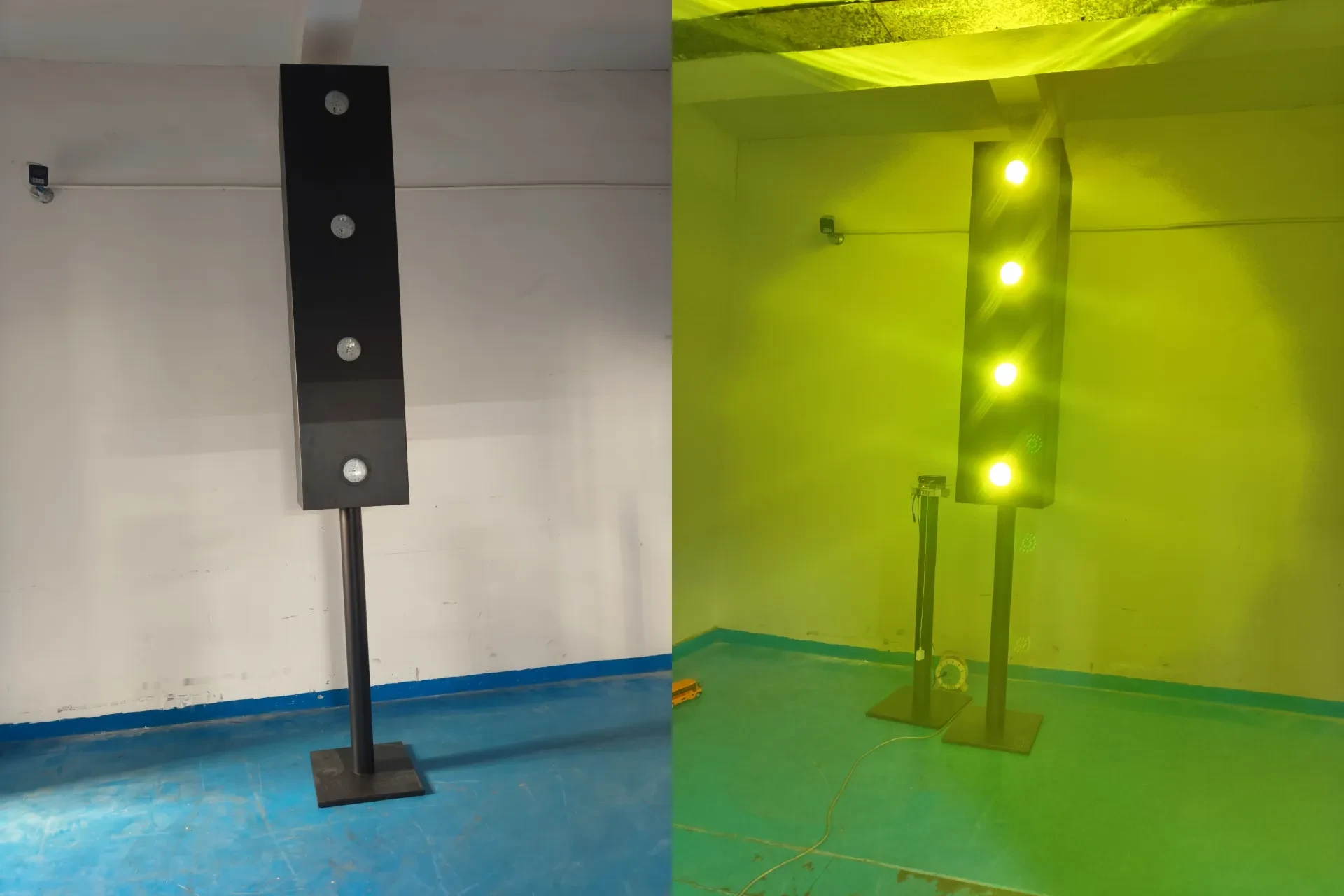
Project: Portable vertical LED stoplights for touring performances
Product: Custom Modular LED Stoplights (Set of 4)
Key Specs: 10ft total length (3.05m), UCS7904 IC, each light has 4 PCBs, each PCB consists of 24× SMD5054 RGB LEDs, 60W per light (15W/PCB), AC220V to DC24V, large glass lenses, external TTLSA controller, MEAN WELL LRS-350-24 power supplies
Customization: Custom PCB design, external controller/power ports, specific signal/power routing
Outcome: A complete, tour-ready lighting system delivered to client specifications
Test video of the actual product: Custom Modular LED Stoplights for a Show Choir →
Project Background: The Challenge of Touring Performances
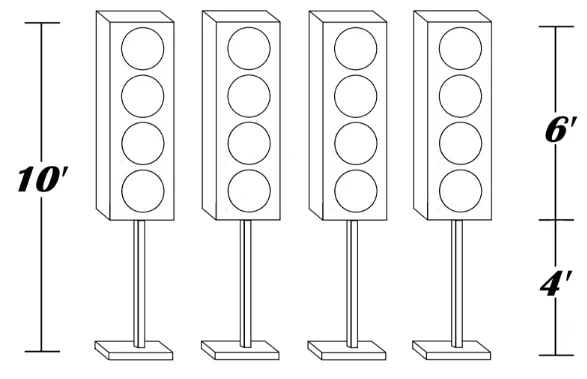
A show choir needed portable, color-changing vertical stoplights for their stage performances. Unlike fixed installations, touring equipment must meet three critical demands:
Portability — easy to transport, set up, and dismantle
Reliability — consistent performance across multiple venues
Flexibility — quickly programmable for different show sequences
The client, Paul, provided detailed dimension drawings and described his exact requirements: four portable vertical stoplights, each capable of changing color, with a total length of 10 feet (3.05m) — split into a 6-foot (1.83m) light box section and a 4-foot (1.22m) base and support section.
The technical requirements:
AC220V to DC24V conversion
Dimensions: 10 × 6 × 4 inches per light
4 × UCS7904 chip per light
96 × SMD5054 RGB LEDs per light (24 per PCB)
60W per light, 4 lights per set
Individually controllable RGB LED pixels with glass lenses
Engineering & Design Phase
1. Custom PCB Design & Client Approval
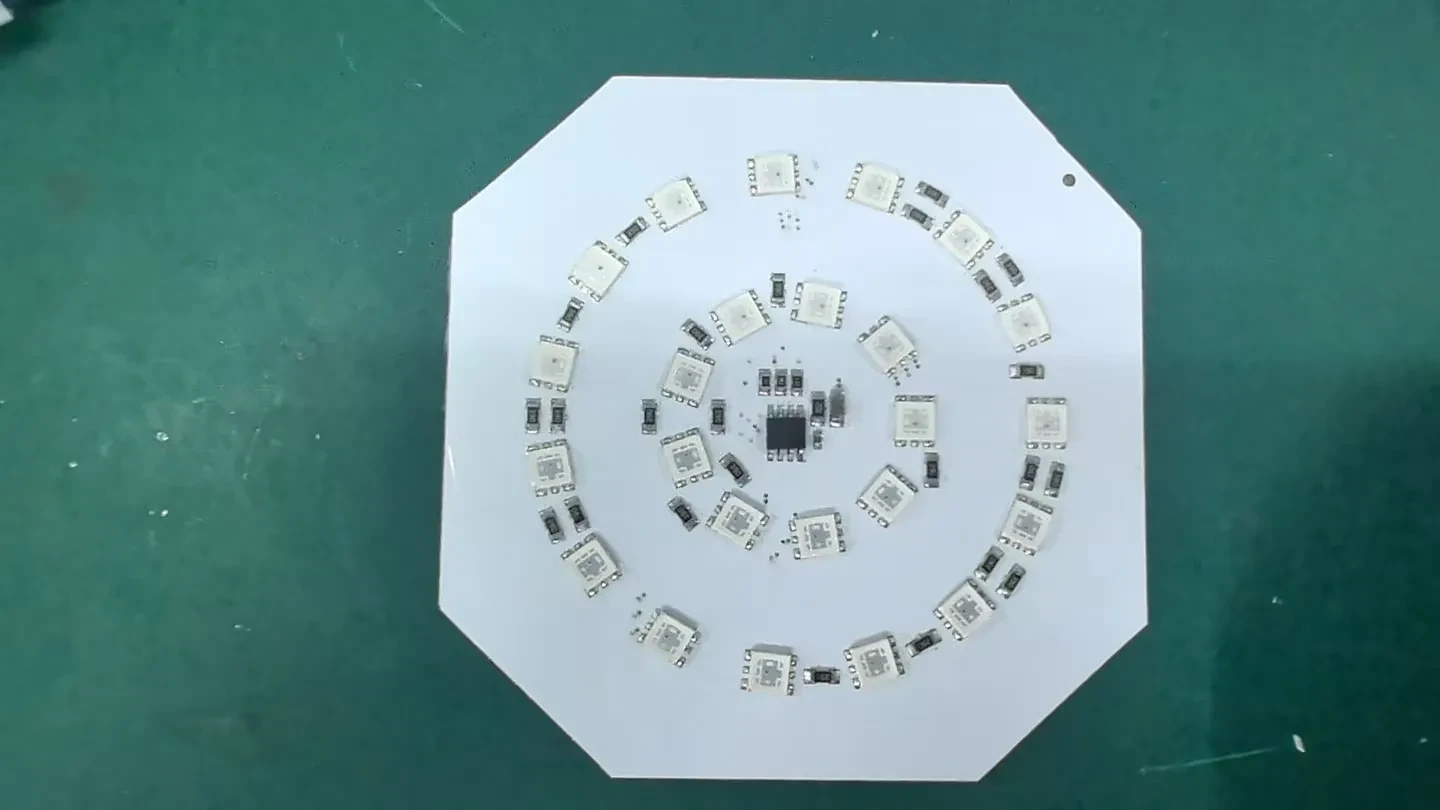
Instead of using a standard off-the-shelf LED board, we designed custom PCBs optimized for the UCS7904 chip and 24 × SMD5054 RGB LEDs per PCB (4 PCBs per light).
The PCB layout was sent to Paul for confirmation before manufacturing — ensuring the LED spacing, current paths, and signal routing were exactly as required.
Why it mattered: The custom PCBs provided precise control over the light output and thermal performance for each section, rather than compromising with a generic board.
2. Optical Solution: Large Glass Lenses
For each PCB, we paired large glass lenses specifically suited to stage and moving-head applications.
Feature | Benefit |
|---|---|
Glass material | High optical clarity, scratch resistance |
Large diameter | Consistent color mixing across the 12 LEDs |
Stage-grade | Withstands high temperatures and high-output operation |
Why glass: Plastic lenses degrade under intense stage lighting; glass maintains optical quality over time.
3. External Controller & Power Design
The initial plan was to house the controller and power supply inside the light enclosure. However, Paul preferred to place them externally for easier programming and setup access during rehearsals.
We adapted the fixture design accordingly:
Upper port: Connects to the power supply
Lower port: Connects to the signal line (GND/DAT)
This layout makes connection, programming, and reconfiguration simple — especially during quick changeovers.
4. Control System: TTLSA Controller
The TTLSA Controller was selected for its flexibility and compatibility with the UCS7904 chip.
Feature | Specification |
|---|---|
Output Ports | 8 ports, up to 8,192 pixels |
Per-Port Capacity | Up to 1,024 pixels per port |
Protocols | Art-Net, DMX512 console |
Playback | SD card (up to 64 DAT files) |
Operation | Offline and online modes |
IC Compatibility | UCS1903, UCS2903, UCS8904, WS2812, TM1812, and more |
Why TTLSA: It allows Paul to program and play effects without a computer, while still integrating with a DMX console when needed.
5. Power Solution: MEAN WELL LRS-350-24
Each light fixture is powered by a dedicated MEAN WELL LRS-350-24 power supply.
Parameter | Specification |
|---|---|
Power | 350W |
Output | 24V DC |
Efficiency | Up to 89% |
Protection | Over-load, over-voltage, short-circuit |
Operating Temp | -25°C to +70°C |
Warranty | 3 years |
Why one power supply per light: Independent power supplies eliminated voltage drop across the set and allowed each fixture to be tested and replaced individually.
The Final Deliverable
Parameter | Specification |
|---|---|
Total Length | 10 feet (3.05m) |
Light Box Section | 6 feet (1.83m) |
Base & Support Section | 4 feet (1.22m) |
Dimensions | 10 × 6 × 4 inches |
Input Voltage | AC220V → DC24V |
LED Type | 24 × SMD5054 RGB per PCB (4 PCBs per light) |
Driver IC | UCS7904 |
Power | 60W per light (4×15W) |
Quantity | 4 lights per set |
Control | TTLSA Controller (offline/online, Art-Net, DMX) |
Power Supply | MEAN WELL LRS-350-24 (1 per light) |
Optics | Large glass lenses |
Ports | Upper: power; Lower: signal (GND/DAT) |
Color Control | Individually controllable RGB LED pixels |
Outcome & Client Feedback
The final system delivered exactly to Paul's specifications:
Four portable vertical stoplights
Custom PCB design approved by the client
Large glass lenses for stage-grade performance
External controller and power placement for easy access
Dedicated MEAN WELL LRS-350-24 power supply per fixture
The system was ready for touring, with quick setup and programming flexibility for different show sequences.
FAQ: Custom Modular LED Stoplights
Q1: Can you design a custom PCB for a specific LED arrangement?
Yes. In this project, we designed a custom PCB for the UCS7904 chip and 24 × SMD5054 RGB LEDs, confirmed the layout with the client, and manufactured it to match the exact requirements.
Q2: Why use glass lenses instead of plastic for stage lighting?
Glass lenses provide high optical clarity, scratch resistance, and consistent color mixing. They are better suited to high-temperature and high-output stage environments, maintaining optical quality over time compared to plastic lenses.
Q3: Can the controller and power supply be placed outside the fixture?
Yes. In this project, the client preferred external placement for easier programming and setup. We designed the fixture with two external ports: an upper port for power and a lower port for signal (GND/DAT).
Q4: What controller is suitable for a custom stage light system?
The TTLSA Controller supports up to 8,192 DMX channels, Art-Net protocol, SD card playback (64 DAT files), and DMX console compatibility. It works with a wide range of driver ICs, including UCS1903, UCS2903, UCS8904, WS2812, and TM1812.
Q5: What power supply is recommended for a 4-fixture LED stage set?
For this project, we specified one MEAN WELL LRS-350-24 per fixture. Each unit provides 350W at 24V DC, with high efficiency and built-in protection. Independent power supplies eliminate voltage drop and allow individual fixture testing.
Q6: Can the LEDs be individually controlled?
Yes. The 24 × SMD5054 RGB LEDs are individually controllable, allowing pixel-level color effects across the fixture.
Related Reading
Need a Custom LED Stage Lighting Solution?
We design and manufacture custom LED stage lights — from PCB layout and optics to controller and power integration. Tell us your dimensions, control requirements, and performance targets, and we will engineer a complete solution.
👉 Contact Us Today for samples, technical support, or a quote.